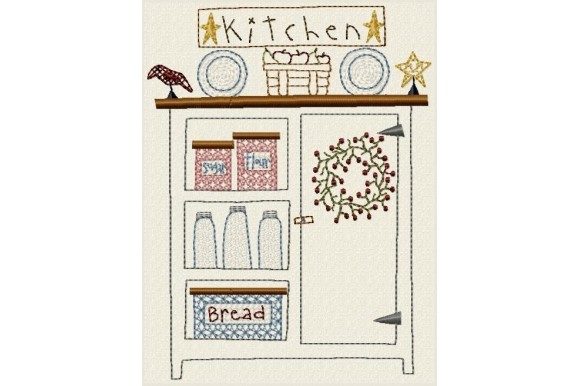
A Practical Review of the Prim Kitchen Embroidery Design
As someone who designs and sells embroidered goods, I constantly evaluate new embroidery files for their real-world potential. When I saw the Prim Kitchen embroidery design on Creative Fabrica, I paused. It promised a nostalgic, farmhouse aesthetic that’s incredibly popular. But would it hold up under the needle for a customer’s apron or a boutique’s kitchen towel? Here’s my honest take after considering it for several commercial and handmade projects.
First Impression: Visual Mood and Project Fit
The Prim Kitchen design immediately evokes a warm, rustic charm. It feels less like a generic farm motif and more like a specific, story-driven piece. This personality is its greatest asset. The detailed illustration suggests it’s an embroidery file built for decorative appeal rather than speed. It naturally fits projects where the embroidery is the focal point: a linen table cloth, a canvas tote bag, or a decorative pillow cover. The design’s “ancient” quality, as described, makes it perfect for creating handmade gifts with a sense of history and warmth.
For Etsy sellers and creative entrepreneurs, this visual mood translates directly to product value. A well-executed Prim Kitchen stitch-out on a simple item can elevate it into a premium, giftable piece. The design’s unique character aids in brand consistency for shops specializing in rustic or vintage-style goods.
Performance in Real Embroidery Projects
Let’s move from aesthetics to the machine. How might Prim Kitchen perform on actual custom apparel and home decor? This is the critical question for any embroidery file intended for commercial use.
Fabric and Application Considerations
Given its likely detail level, Prim Kitchen would be best applied to stable, medium-weight fabrics. Think:
- Cotton kitchen towels and aprons
- Canvas for tote bags
- Twill or denim for caps
- Linen or cotton-blend for pillow covers
I would approach stretchy fabrics like on sweatshirts with caution, and definitely use a sturdy cutaway stabilizer. The potential for dense stitch areas or small decorative elements means fabric distortion is a risk if not properly stabilized. For baby items or baby blankets using softer fabrics, extra testing on scrap material is essential.
Detail, Hoop Size, and Practical Execution
The product description doesn’t specify hoop size, so this is a key detail to verify on the Creative Fabrica product page before purchase. Designs with intricate elements often require a larger hoop to maintain detail integrity. If Prim Kitchen contains tiny lettering or very fine lines, stitching it on a curved cap surface or as a small embroidered patch could be challenging. Those small details need careful inspection after a test stitch-out.
For dark fabric, thread color contrast is paramount. The design’s success will depend on a thoughtful thread palette choice to ensure the “ancient” illustration remains clear and crisp on darker backgrounds.
Affecting Product Value and Customer Trust
Using a high-quality machine embroidery design like Prim Kitchen has a direct impact on your finished product’s perceived value. A clean, detailed stitch-out communicates craftsmanship and care, building immediate buyer trust. For handmade shop owners, this enhances the overall handmade presentation.
In product photography for your Etsy listings or printable mockups, a well-embroidered item featuring this design becomes more engaging. It tells a story, which boosts customer engagement. For seasonal handmade gifts or boutique merchandise, this story-driven element increases its giftability.
Essential Practical Steps Before Use
Before running Prim Kitchen for a paid customer order or stocking it for a craft fair, a professional workflow is non-negotiable. Here is my standard pre-use checklist for any digital embroidery file, which applies perfectly here:
- Check the Creative Fabrica product page thoroughly. Confirm the listed file formats for your machine, any mentioned hoop size recommendations, and the commercial license terms for selling finished products.
- Stitch a test on scrap fabric identical to your project fabric. This reveals true stitch density, potential puckering, and how small details like possible satin stitch borders or fill stitch areas behave.
- Compare light and dark fabric mockups mentally or digitally. Plan your thread colors accordingly. A design with this mood might benefit from a muted, natural palette.
- Use the proper stabilizer for your project. No guesswork. The right stabilizer is the foundation of a professional outcome.
- Inspect the small details after stitching. Are any lines too fine? Would it benefit from slight digitizing adjustments for your specific application, like on an apron or kitchen towel?
Final Verdict on Prim Kitchen
The Prim Kitchen embroidery design from Creative Fabrica is visually compelling and niche-specific. It’s not a one-size-fits-all file; it’s a specialized design asset for creators targeting the rustic, farmhouse, or historical aesthetic. Its value lies in its strong decorative personality.
For apparel decorators and small business owners, its practical use requires due diligence. The potential for detail means it likely needs careful handling on stretchy fabrics or small hoop sizes. However, applied correctly to suitable products—table cloths, tote bags, pillow covers—it can produce standout work that justifies the effort.
Ultimately, Prim Kitchen is worth downloading if your product line aligns with its style and you commit to the necessary testing. It’s a design that can help transform a simple item into a story-rich, premium handmade product, which is exactly what many creative entrepreneurs and their customers are seeking.