Naval Military Guard Redwork Design for Branded Merchandise
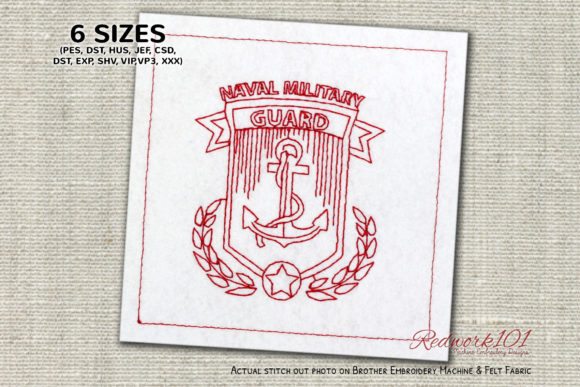
From the perspective of a professional embroidery designer, a new digital embroidery file presents not just an image, but a potential brand asset. Today, we’re reviewing the Naval Military Guard Redwork Design, considering its application for small business merchandise, branded patches, and custom apparel. This evaluation is based purely on its description as a lovely, professional naval redwork embroidery, with the note that the depicted Box Stitch is optional.
First Impression: Professional & Classic Elegance
The title and description immediately suggest a design with a classic, structured aesthetic. The term “naval” and “guard” imply authority and heritage, while “redwork” speaks to a traditional, single-color embroidery technique. This combination creates a first impression of professionalism and timeless elegance. It feels neither overly rustic nor aggressively modern; it occupies a space of dignified decoration. For a business, this means the design can convey trust and established quality without appearing flashy or overly decorative.
Business Applications: From Patches to Product Accents
The suggested applications—jackets, scarves, home decor—are broad, but for a commercial enterprise, we need to think more specifically. This machine embroidery design holds significant potential across several key merchandise categories.
Branded Embroidered Patches & Uniform Accents
An embroidered patch is a versatile branding tool. The Naval Military Guard Redwork Design, with its likely clean lines and symbolic imagery, could be excellent for creating patches for staff uniforms, especially for businesses with a nautical, disciplined, or heritage-themed brand identity. Think of a café near a harbor, a boutique with a classic aesthetic, or a pet brand with a “guardian” theme. This design could serve as a subtle chest logo or a sleeve detail on aprons and work shirts, enhancing visual consistency and professionalism.
Cap Embroidery & Tote Bag Mark
For cap embroidery or as a mark on tote bags, the design’s likely clarity is crucial. A single-color redwork scheme often translates well to smaller sizes, provided the details aren’t too intricate. This could be a strong logo accent for customer-facing merchandise, creating a premium feel on handmade product bags or event merch.
Aprons, Packaging & Product Labels
For a bakery, florist, or creative studio, embroidered aprons are a powerful branding element. The Naval Military Guard Redwork Design embroidered on an apron bib can elevate a simple uniform to a statement of craft and care. Similarly, as a small accent on product packaging tags or as part of a product label for a handmade shop, it adds perceived value and buyer engagement through tactile, quality details.
Critical Considerations for Successful Application
While the design sounds promising, its success in commercial embroidery projects depends on meticulous preparation. The description does not specify exact stitch count, file formats, or hoop size, so these must be verified with the file provider.
Scale & Placement Challenges
The most common pitfall is scaling a design without testing. Before committing to production for small business merch, you must:
- Test it at your intended patch size. If you plan a small cap front or a tiny label accent, stitch it out at that dimension first. Redwork can simplify, but tiny lettering or dense details might blur.
- Consider curved surfaces. Embroidering on a cap front requires a design that distorts well; test on a curved mockup.
- Evaluate fabric texture. The final look on a textured linen tote bag versus a smooth polo shirt will differ. Always test on real fabric samples.
Technical Execution for Durability
For items like uniforms or tote bags that need frequent washing, durability is key.
- Stitch density matters. A very dense design on a lightweight fabric can cause puckering and weaken the material. Use appropriate stabilizer.
- Thread color contrast is vital for a single-color design. On dark uniforms (like navy blues or blacks), a red thread may not pop as intended. Consider testing a mockup in black and white first to assess form, then evaluate color against your actual garment colors.
- Always confirm commercial licensing before using the digital embroidery file for any business product. The license terms are not specified in the description and are a mandatory check.
Impact on Brand Identity & Customer Perception
Integrating the Naval Military Guard Redwork Design into your merchandise is a brand decision. Its classic, professional feel can bolster customer trust and product value. For a local business, it signals attention to detail and a commitment to quality presentation. It can make a custom apparel item feel less generic and more like part of a cohesive brand story. However, its military-inspired theme should align with your brand’s core narrative—it may not suit a playful, whimsical brand but could be perfect for one emphasizing reliability, tradition, or protection.
The Designer’s Practical Checklist
Before running production, follow this short list:
- Create a printable mockup or stitch-out sample for client or internal approval.
- Check the design’s spacing and outline clarity at your target hoop size.
- Stitch it alongside your other design assets to ensure visual harmony.
- Test on the specific fabric texture of your final product (apron canvas, bag cotton, shirt poly).
- Use the proper stabilizer and settings to ensure a clean finished product that withstands use.
In conclusion, the Naval Military Guard Redwork Design presents a compelling option for businesses seeking a professional, elegant embroidery motif for their merchandise. Its potential as a patch, uniform accent, or bag mark is significant, but its success hinges on rigorous testing and a clear alignment with your brand’s identity. By treating it as a strategic brand asset and not just a decoration, you can leverage this design to enhance your business’s visual story and perceived value in the marketplace.