Grandma Embroidery: A Craft Fair Designer's Practical Review
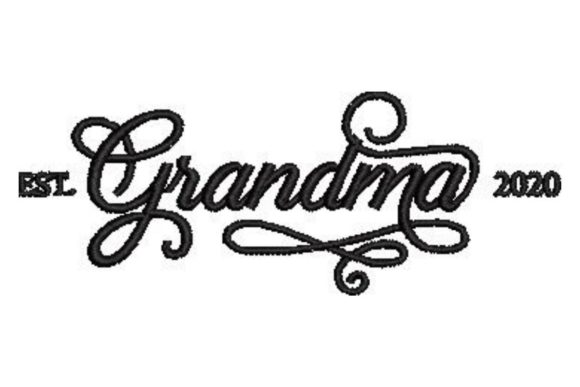
As an embroidery designer preparing for a weekend craft fair, my first task is to evaluate every design I plan to turn into products. Today, I’m looking closely at the Grandma embroidery design: a very pretty, cursive rendition of the word "grandma." My review isn't just about aesthetics; it's about real-world performance on the sales table. Will this design draw eyes, feel valuable, and be practical to produce in batches for my booth?
First Impression: Elegant & Warm, Not Just Decorative
The immediate feeling of Grandma is elegant and softly sentimental. The cursive font suggests a premium, heartfelt quality—it’s not a bold, graphic statement or a humorous quote. This positions it perfectly in the farmhouse-to-modern spectrum that appeals to shoppers looking for gifts with emotional weight. On a crowded craft fair table, this design stands out through its emotional resonance, not just its visual noise. It whispers "handmade gift" rather than shouts "generic decor." This is a crucial distinction for building perceived value.
Product Performance: Where Grandma Shines & Stumbles
I imagine my display: tote bags, aprons, tea towels, caps, patches, pouches, and pillow covers. Grandma needs to find its best home.
Strong Candidates for High Sales
First, the obvious winner: pillow covers. The description itself notes it will look lovely on a pillow, and for a craft fair, this is a premium, gift-ready product. A cursive Grandma on a linen or cotton pillow feels instantly complete. Tote bags and market bags are another excellent fit. The design acts as a beautiful, personal accent on a functional item, increasing its appeal as a gift for a grandmother or from a grandmother. Small fabric pouches or gift bags become special with this embroidery—it’s a perfect small accent that transforms a simple item.
Considered Applications with Careful Setup
For aprons and kitchen towels, the cursive elegance works, but fabric texture matters. On a textured tea towel, small cursive lettering can lose clarity if stitches are too dense or the stabilizer isn't right. On an apron, placement is key—a central, chest position feels more intentional than a small corner accent. Embroidered patches featuring Grandma could be very popular, but here, tiny details in the cursive font must be inspected. If the design has very small, tight curves, they might not stitch cleanly at a small patch size, affecting the handmade quality.
Challenging Surfaces Requiring Testing
Caps and curved surfaces are tricky for any cursive design. The curvature can distort the flowing letters. I would only proceed after a successful test run on a scrap cap front. Dark fabrics are another consideration. A single-color "pretty" cursive design relies entirely on thread contrast. Using a light thread on dark fabric is essential, but some cursive fonts with thin lines can appear broken or faint. This must be tested on scrap fabric first.
Practical Production & Selling Points
Turning a digital embroidery file into a sellable craft fair product involves logistical thinking.
Understanding & Batch Production
The design is incredibly easy to understand at a glance—it’s a single word in a pretty script. This is a major advantage for quick customer comprehension at the busy fair. For me as the maker, its simplicity also means it’s highly repeatable for batch production. I can efficiently run multiple pillow covers or tote bags without complex thread color changes or lengthy stitch times, provided the stitch density is manageable. However, "pretty cursive" can sometimes mean densely packed stitches to create smooth lines, which can lead to longer stitch times and fabric puckering if not properly stabilized. I absolutely need to test the design on scrap fabric with my chosen stabilizer to check this.
Photography & Online Sales
For my Etsy listings or online shop photos, Grandma photographs beautifully. A single, elegant word on a neutral fabric creates a clean, focus-driven image that looks professional. Creating at least one real mockup for photography—not just a printable mockup—is vital to capture the true texture of the stitches. This authenticity boosts buyer engagement online and translates trust to the craft fair booth.
Display Impact & Customer Attention
In the booth, products with this design benefit from grouping. A section dedicated to "Grandparent" gifts, with Grandma pillows alongside perhaps other related designs, creates a strong narrative. The design itself attracts customers who are visually or emotionally seeking a gift—it’s a direct connection. Its elegance supports a higher price point than a more simplistic design, enhancing the handmade quality and product value perception.
Essential Designer Notes Before Production
Before I hoop my first product for the fair, my checklist is specific:
- Test on Scrap Fabric: Use the exact fabric type (linen, canvas, towel) I plan to sell. Check for puckering and clarity.
- Check Thread Contrast: Especially if venturing beyond light fabrics. Does the cursive flow remain crisp on dark material?
- Review Spacing & Scale: The design likely comes with multiple embroidery file sizes. I must choose a hoop size that makes the design legible and attractive on each product type. A small pouch needs a smaller version than a tote bag.
- Inspect Stitch Density: Run the file and observe. Are areas overly dense? This affects production time and fabric health.
- Use the Right Stabilizer: For towels or bags, a sturdy stabilizer is non-negotiable to maintain the design's prettiness.
- Create Real Mockups: I will physically make one of each top product (pillow, tote, pouch) to judge final appeal and touch.
- Compare Fabric Colors: Which background colors make the design feel most premium and warm? Cream, linen, soft gray?
- Confirm Commercial Licensing: The description mentions it comes with multiple embroidery files. I must verify the license permits me to sell the finished products at a craft fair or in my small shop. This is a fundamental step for any digital embroidery file used commercially.
Final Judgment for the Craft Fair Booth
Grandma is a strong contender for my upcoming event. Its emotional elegance gives it a natural place in the gift-focused section of my table. Its practical advantages—easy comprehension, batch production potential—make it a reliable designer choice. The key to its success will be targeted product placement and meticulous production testing. It will shine best on pillow covers, tote bags, and small gift items, where its cursive beauty can be fully appreciated. For aprons, towels, or caps, careful testing will dictate its viability. By following the essential pre-production steps, I can transform this pretty machine embroidery design into a collection of handmade products that will not only look lovely but will also connect with customers and, ultimately, sell.